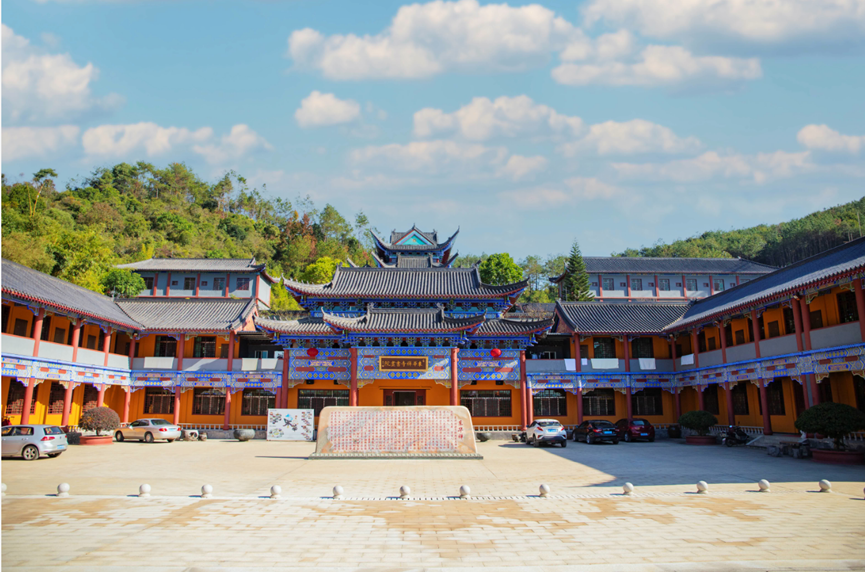
At Donghua Zen Temple, visitors can not only experience the essence of Buddhism, but also explore the unique charm where art and Buddhist culture converge at the Academy of Calligraphy and Painting.
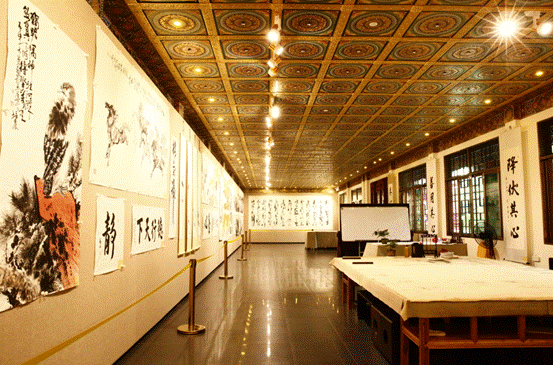
The Donghua Zen Temple Academy of Calligraphy and Painting was founded by Venerable Wanxing on June 18, 2016. Currently, the academy houses nearly 8,000 works of art, donated by almost 700 Chinese and foreign artists—including authentic works by renowned painters and calligraphers, as well as pieces created on site by artists. The academy features 300 meters of professional exhibition space and 2,000 square meters of creative studio, integrating calligraphy and painting creation, exhibitions, and art collection while advancing research, education, and cultural exchange on Zen culture.
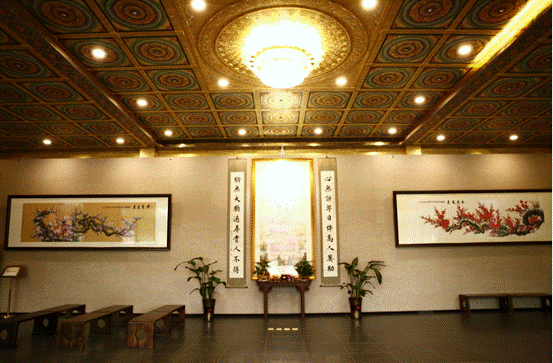
Since its opening, the Academy of Calligraphy and Painting has gathered artworks from multiple countries and hosted a variety of cultural exchange activities. These initiatives bring Chinese culture and ideas to the world through this Zen sanctuary, while also introducing global cultures to Donghua Zen Temple. It is worth mentioning that all proceeds from the charity sales of the academy’s artworks fund the construction of the “Eastern International Zen Academy” and the “Nursing Home” at Donghua Zen Temple.
Venerable Wanxing stated that the Academy of Calligraphy and Painting serves as a platform for artists to display their works, learn, and exchange ideas. It also provides an exceptional learning environment for believers and monks. By integrating art with Buddhist culture, the academy fosters spiritual cultivation while serving as a window to showcase the beauty of traditional Chinese art to the world. Furthermore, it promotes equal dialogue among different cultural entities around the world, fostering an environment where diverse cultures can coexist harmoniously and inspire one another.
“Of all virtues, filial piety comes first.” Buddhism considers it fundamental to human conduct and spiritual practice. Venerable Wanxing also emphasizes transmitting this virtue. He personally created a calligraphic “Longevity” character, artistically merging four elements: “Filial Piety”, “Person”, “Elderly”, and “Longevity”. He once stated, “There are two things in life that cannot be delayed: honoring parents and doing good deeds.” (translator: Jiang Renfeng)